Sunday, January 22, 2023

Product Management: "Inspired" and "Empowered" - Are you?

"Inspired" and "Empowered" - Two excellent reads for all product people and executives of products businesses: 
  • the importance of customer-centric product development
  • the value of empowering cross-functional teams 
  • the need for clear product vision and strategy
  • and the role of experimentation in product innovation

Marty Cagan is a well-known author, speaker, and product management expert. He is the founder of the Silicon Valley Product Group, a consulting firm that helps technology companies create and deliver successful products. Cagan has more than 20 years of experience in the technology industry, and has worked with companies such as AOL, HP, Netscape, and eBay. Cagan is a frequent speaker at industry events and is considered a thought leader in the field of product management.

"Inspired: How to Create Products Customers Love" is a book written by Marty Cagan. The book is considered a go-to guide for product management, and is based on Cagan's extensive experience in the technology industry. It covers the entire product development process, from idea generation to product launch. Cagan explains how to develop a deep understanding of your customers, how to identify and solve their problems, how to create and implement a product vision, and how to measure and improve the performance of your products. He also provides real-world examples and case studies to illustrate his points. The book has been widely praised for its practical and actionable advice on product management.

"Empowered: How to Create a Culture of Product Ownership" is a book written by Marty Cagan. The book is focused on the role of product ownership in the technology industry and how it is becoming a critical factor for success. It covers the importance of product ownership, how to build a culture of product ownership, how to empower product owners, how to develop and manage product teams, how to measure and improve product performance, and how to deal with common challenges. The book provides real-world examples and case studies to illustrate the concepts and ideas presented. Cagan's goal is to help organizations create a culture of product ownership that allows them to create products that customers love.

These two books are considered foundational to product lifecycle management and on how to create and capture value with products.

"Inspired" and "Empowered" - are you?

Monday, January 2, 2023

Ergonomics of Airport Carpets

Since quite some years I used to capture a shot of those beautiful, exceptional, tasteful, sometimes disgusting carpets you can experience when arriving at a new airport destination.

I collected my carpet captures under #airportcarpet on Facebook. - Check it out at: https://www.facebook.com/hashtag/airportcarpet. And, as you can see, I am not the only one fascinated by airport carpets.

I was always surprised what was there to see. And weighing different pros and cons I was not always sure if a carpet is truly the best option for an airport terminal interior design.

But, what is the ergonomic point of view?


Ergonomics is the study of how people interact with their environment, including the design of products and systems to improve comfort and safety. In the context of airport carpets, ergonomics refers to the ways in which the carpet can be designed and maintained to reduce fatigue and strain on travelers' bodies.

One way that airport carpets can contribute to ergonomic comfort is by providing a soft, cushioned surface to walk on. Hard, smooth floors can be tiring and painful to walk on for long periods of time, especially for people with foot or back problems. A well-cushioned carpet can help to reduce the impact of each step and make walking more comfortable.

Another aspect of ergonomics in airport carpets is the design of the carpet itself. A good airport carpet should have a smooth, even surface with no sharp or raised edges that could trip or stumble travelers. The carpet should also be easy to navigate, with clear visual cues to help people find their way around the airport.

In addition to the design of the carpet, the maintenance of the carpet is also important for ergonomic comfort. A dirty or poorly maintained carpet can be slippery and difficult to walk on, leading to an increased risk of falls and injuries. To maintain the ergonomic comfort of airport carpets, it is important to regularly clean and vacuum them to remove dirt and debris, and to repair any tears or damage as soon as they are discovered.

Overall, the ergonomics of airport carpets are an important consideration in the design and maintenance of these spaces. By taking into account the needs and comfort of travelers, airports can create a more pleasant and enjoyable experience for all who use them.

Wednesday, March 31, 2021

Mercedes-Benz EQC: Features for Money

Since a couple of months I am driving a Mercedes EQC. Mercedes' first fully electric car.

And, I like it! - There are many things about this car I would not like to be missing.

After some very poor customer experience with main competitor - and for most aspects of e-mobility I would call them market leader - Tesla, I decided to go for Mercedes EQC.

Comparing the EQC with Tesla vehicles I have to say that Mercedes knows how to build cars. Especially the interior design is top end of car manufacturers craft. There is little missing with respect to drivers and passengers comfort. However, this can be called commodity nowadays. Any of the traditional upper class car builders is providing comparable respective comfort and drivers' experience.

What is missing is the innovative user experience associated with e-mobility. In these aspects there is a clear and massive gap versus Tesla technology. 

The question is: why?
Is it because of intellectual property? However, I thought Tesla made all its patents public and freely available, this in order to foster innovation for e-mobility.
Is it because of lack in product leadership at Mercedes? This could well be. In an established industry such as car manufacturing product leadership might be a decentralised capability across the company. While now when innovating in new technologies, in products with new characteristics, in new product ecosystems, there need to be new visionary and strong product leaders in order to make this business great.

What we are experiencing when looking at electric cars from traditional car manufacturers might well be the challenge when reliable stable and good companies - such as Mercedes-Benz or Audi - are trying to enter the space of a new growth business - which entering e-mobility clearly is.
These mechanisms are very well described in "Good to Great - Why some companies make the leap ... and others don't" by Jim Collins. A book I can highly recommend in these regards.

In order to provide some illustration, here some critical examples from my last months of Mercedes EQC user experience:

Charging at home: 

Mercedes is providing several options for charging at home. One is Mercedes' own wall box with a very nice design and the possibility - competitor installations are not offering that feature - to roll up the cable when not being used. Something I would not be missing given the fact that cables are always too long or too short but never right in length. When the cable is plugged into the car, the car immediately starts charging. And, this is what I do not like too much. 

The feature I am missing is a simple possibility that would give me control over this charging process.

There is absolutely no way to program for instance the starting time point for the charging process. I can program when I would like to have my car fully charged and air-conditioned but this does not really solve my immediate problem. 

Why is this important to me as car owner, user, driver, customer? Where I live electricity is much cheaper at night, after 8pm, than during the day. When I arrive at home prior to 8pm I would like to have a simple option to being able plugging the car immediately but starting the charging process no earlier than my selected time point. 

How could this be achieved in a simple and cheap manner? The smartphone app which allows me to configure virtually every setting of the car allows also to select maximum charging capacity from 50% - 100%. Hence, it would be possible to send a remote signal controlling at least part of the charging process. Given the fact that there is already that cloud and app ecosystem respective intelligence even does not require to be part of the car software. 

On the other hand, reflecting a bit what is needed for a respective feature, then this feature can't come too expensive. - If some Mercedes EQC product managers are reading this, please take something simple in that context up as a priority. I am pretty sure that many of your customers will be very positive about it. If you need help writing a user story, please get in touch with me ;-)

Internal charging module limited to 7.5 kW (after December 2020 there was an upgrade allowing 11 kW):

I can not understand why these limitations. Shouldn't charging be limited on the electricity supply side? It would be nice if one could use a standard house installation to its maximum capacity. 

Finding a charging station - the missing intelligence:

When on the road searching for charging points in the EQCs navigation system there are a number of aspects which could benefit some improvements: 

  • Search for charging station providers for example (e.g. "Ionity"). It should be possible to get a list with all charging stations from a respective provider sorted by distance from current position, along the route, or at destination. The latter three options are implemented in charging station search, but searching for names is not really successful. Why would I like to do that? I might know that there is a charging station with interesting capacity somewhere in the area. How can I find it now? I recently was driving around lake Neuchatel in Switzerland knowing that on the high way around Estavayer le lac there is a Ionity power charging station. Guess what, I was not able to select it in the navigation system. Thanks to Google Maps on my smartphone I was able to identify the relevant service station.
  • Another feature that is missing when searching for charging stations is the possibility to
    immediately seeing what maximum charging power respective charging points can deliver and how many charging points there are. It would even be nice if the system could tell me if there is spaces available or if all charging slots are occupied. Why am I interested in that? Ok, the answer might be obvious, I would like to give charging stations priority where I have the highest possible charging capacity. Why would I go for a charging point with 7kW or 20kW if there is one with 50kW or much higher near by? Again here the solution is Google Maps or some other app. Only issue, I am not allowed to tap around on my smartphone and such apps while driving!

At low battery power:

When approaching very low battery capacity the car is suggesting to search for the next charging point. What I was wondering is if there was no way of actively providing options along the route. Just suggesting breaks in order to optimise capacity and keep time for required charging breaks low. I am pretty sure that there are smart algorithms which could help on that. If a driver is programming his entire planned trip, then I would expect the car to take care of electric capacity in order to arrive at destinations in time and to make it home without being forced in long charging sessions towards the end of EQCs capacity.

Overall:

There are a number of other features which need some improvement. For example the automatic speed sign recognition and associated adaptive cruise control. There are many situations where the car changes speed out of the blue. While other manufacturers are talking of fully autonomous driving Mercedes is still struggling with simpler features. Ok, I am not too much in need of autonomous driving because I like driving in the end. I just would like to point out some room for improvement.



Nespresso anywhere, anytime - what an experience

Recently I became aware of a fancy new product! - The WACACO Minipresso! - What an experience!

As a coffee lover I am always on the look out of a good coffee place.

Now, when traveling or hiking remote places the availability of good quality coffee can be a challenge.

Yes, you could go for some instant coffee, or roast grind and brew your coffee on the go. But, nowadays in the age of capsuled high end coffee there needs to be other options.

I lernt about this fabulous - Wacaco MiniPresso - device from a friend of mine. He had to quarantine (this was November 2020 during the global COVID-19 pandemic) for two entire weeks locked up in a hotel room in Phnom Penh, Cambodia. My friend was reporting about his daily luxury, a Nespresso coffee twice a day, on his company blog (read the original story here). When I saw that device, I decided to test it for myself.

After some little search on-line I was able to order one. - Get yours here

Wacaco Minipresso GR, Portable Espresso Machine, Compatible Ground Coffee, Hand Coffee Maker, Travel Gadgets, Manually Operated, Perfect for Camping, Hiking

To put it at a test, I went on a winter hike where I am living here in Switzerland.

Temperature was freezing -10°C. There was a strong wind. Packed with my MiniPresso, a thermos of boiling water we went off for a hike around beautiful arctic winter landscape.

What could be better than a break with delicious coffee. Coffee perfectly brewed out of a coffee press that fits in the pocket of your winter anorak.

Handling is a bit of a struggle at -10°C but the outlook for smell and taste of good coffee compensates a lot.

The MiniPresso is a well designed product that serves many needs of coffee addicts when being in remote places. Or would you trade off against a solution with some whatever instant coffee?

It couldn't be better to survive an outdoor experience with the experience of self brewed coffee!


Saturday, January 30, 2021

Over-engineering - design for a smarter world

On many occasions I became irritated as the user of a product when noticing that the product was designed to be smarter than me. - Just have a look at many software products we are using in daily life, or at user interfaces from coffee machines, or at text completion on a smartphone, ...

Now, these days I bumped into this funny video about testing the sophisticated design of a children's play. I feel so sorry for the designer. It must be so painful for her (yes, it's an actor, but having been in the role of designers, testers, and end users, I have seen this situation many times).

It's funny to watch this scene, but imagine the scene while designing the play!

The designer get's all these fancy, and sophisticated requirements and use cases from some innovator, a product manager, or just from potential customers of the product. The tell him thousands of things what feature the product needs to exhibit.

In development, engineers think about these requirements about features and ask themselves, what problem the end user is going to solve with the solution. - Confusion arrises.

Often - I have seen this so many times - a dialog between designers and product managers evolves.

- Engineer: "what do you want to achieve with these elements of different form and shape"

- Product marketeer: "don't ask questions, just implement it - that's what you are paid for. Otherwise I can not sell that product."

- Engineer: "but it does not make sense - can we talk to some end customers"

- Product manager: "just do it! You are jeopardising my bonus payments!"

- ...

And so on, until the engineer does what he is asked for at the level of features. That's what he is paid for.

The result: yes, we know it!

- End user: "what the f... these stupid designers and engineers, have they ever been talking to a potential user?"

The moral of the story - you do know all of these books about user centric design, about lean business build up, about most uncertain assumption testing, ...!

Sunday, January 17, 2021

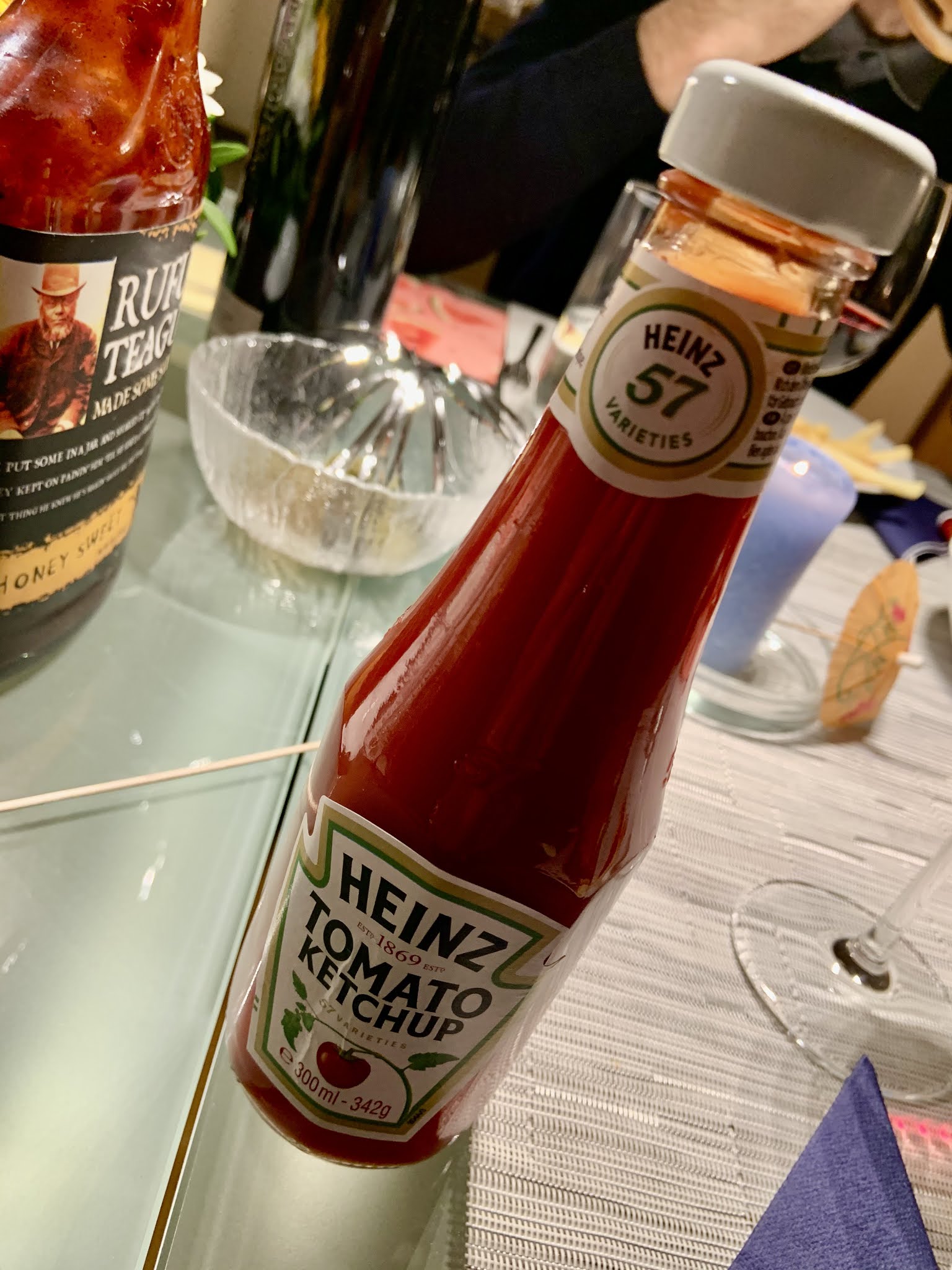
Heinz Ketchup - Usability of bottled tomato

Since 1869 Heinz is selling sauces in a bottle. - The legendary Heinz Ketchup has been introduced in 1876. The red tomato sauce in that characteristic glass bottle.

That bottle we all know very well and made our experiences with. A bottle which allows dosing of that delicious tomato sauce either in too low, or far too high volumes. - How about you? - I never get it right!

You still can buy Tomato Ketchup in that traditional glass bottle. - Why? - Who knows? - Usability, end user comfort, or great customer experience is not the reason. That's for sure!


In the meantime you can get it in flexible plastic bottles as well. Bottles which allow storage in the fridge, and more or less control over dosing.

Get a bottle here!

Hence Heinz - or Kraft Foods - is fully aware of the limitations of that fluidic sauce with variable viscosity. The effect is called thixotropy. And the combination of this red sauce called Ketchup and the famous Heinz glass bottle is leading to an extreme of such effect.

Interestingly this did not make the traditional non user friendly bottle to become extinct. 

Only Yesterday, I was invited for diner. We made hamburgers, and suddenly one of these traditional Heinz glass bottles showed up on the table. No skill on earth would help to control that red fluid to flow nicely out of that bottle. There is only the way of causing a big mess, or sticking your knife into the bottle in order to get some of the delicious sauce out. - No question, we survived. Everybody left the table well fed, and the mess on plates and table was not too big at the end.

But still, why did that bottle survive? - I just don't get it!

You could argue now that usability is subordinate and totally unimportant when it comes to usability. Is Heinz Tomato Ketchup in the traditional bottle another example - next to the German ERP software company SAP - that usability is totally unimportant in order to become global market leader? - Could well be!

Or is it just that the average Tomato Ketchup consumer is just not susceptible to usability questions and does not give respective feedback to the manufacturer?

Or, is a nostalgic bottle with horrible usability outweighing user experience? - Questions remain!


Tuesday, November 24, 2020

Coffee is vital to survival! - Usability of coffee machines could be key ...

I love coffee. - The taste, the smell, the process of brewing and preparing, ...


Now, if dinosaurs became extinct because of not having coffee, or just because of incredibly poor usability of coffee machines would be an interesting subject to study.

For me personally - usability of coffee machines is key!
As a long time user of the Nespresso coffee system - which I overall really like - I have to say that many things have been done right by Nespresso.

It is not that easy to develop a robust end to end system with third party manufacturers of coffee machines, brewing units, and probably a high heterogeneity and complexity in coffee production, roasting, and packaging processes in order to deliver a reliable and reproducible coffee at the finger tips of the end consumer..

However, there is that one trap I am falling into every single day at least once. - The empty water tank trap!

To put out a quote of a famous author of usability and user experience literature - "Don't Make me Think", Steve Krug

Products that require the user to think are just not finished!

It goes into same category as "any product that needs a manual to work is broken"- Elon Musk.

Now, how is this this with Nespresso coffee machines?

- Need for a manual: I can not remember that there is a need for that!
- Making me think: no, it does not make me think! - Nevertheless, I repeatedly fall into the same trap of missed usability! - The empty water tank!

Obviously, one key precondition for brewing a good tasty coffee is supply of water. With a non industrial coffee machine - a consumer model - where there is no direct and continuous supply of water filling up the water tank, and making sure that there is a critical level of water in the tank prior to starting the coffee brewing process becomes a user task.

Now, my problem!
It feels like every time I am approaching that Nespresso coffee machine in our kitchen, the water tank is empty. Given the fact that I do not like to think and the machine does not prevent me actively from pushing the button to start brewing a short or a long coffee, I am wasting quite a number of coffee capsules on water shortage events. - Why on earth has none of these coffee machines a clear and simple indicator on the front side of the product for low water supply levels? - Why?

Here some examples. The machines are well engineered - no doubt. The machines exhibit appealing designs - no doubt. The main operating functions - assuming filling water supply is not a main operating function which might be the major mistake of this set of product requirements - are easily reachable from the front. There was some usability engineering - no doubt. To place the water tank at the rear of the machine. That's not the worst thing to do. But, it's not the most convenient place when it comes to inspecting water supply levels. - A clear miss in assessing usability risks. Or, if it has been assessed correctly, then the mitigation is just a desaster!

I remember the early days of Nespresso machines. On the first generation machines the water tank was kind of a drawer at the bottom of the machine. And, there was a little indicator - mechanical, hence not expensive - which showed the current water levels from the front.

Now, there is that one argument of product designers - "the user will learn".
In my case - good, I might not be the average and most representative user - I do not learn about it. And my level of disappointment if the water supply pump runs dry is ever raising.

To conclude there are two questions remaining.
One, how big can such usability pain grow before a critical level for users to change product is reached?
And, two, what if dinosaurs became extinct due to poor coffee machine usability and not due to not having coffee available?